
Neurological Conditions
Parkinson’s Disease: Symptoms, Nervous System Changes, Diagnosis, and Treatment
Parkinson’s disease is a progressive neurological disorder that primarily affects movement but can also involve many non-movement symptoms.
Overview
What is Parkinson’s disease?
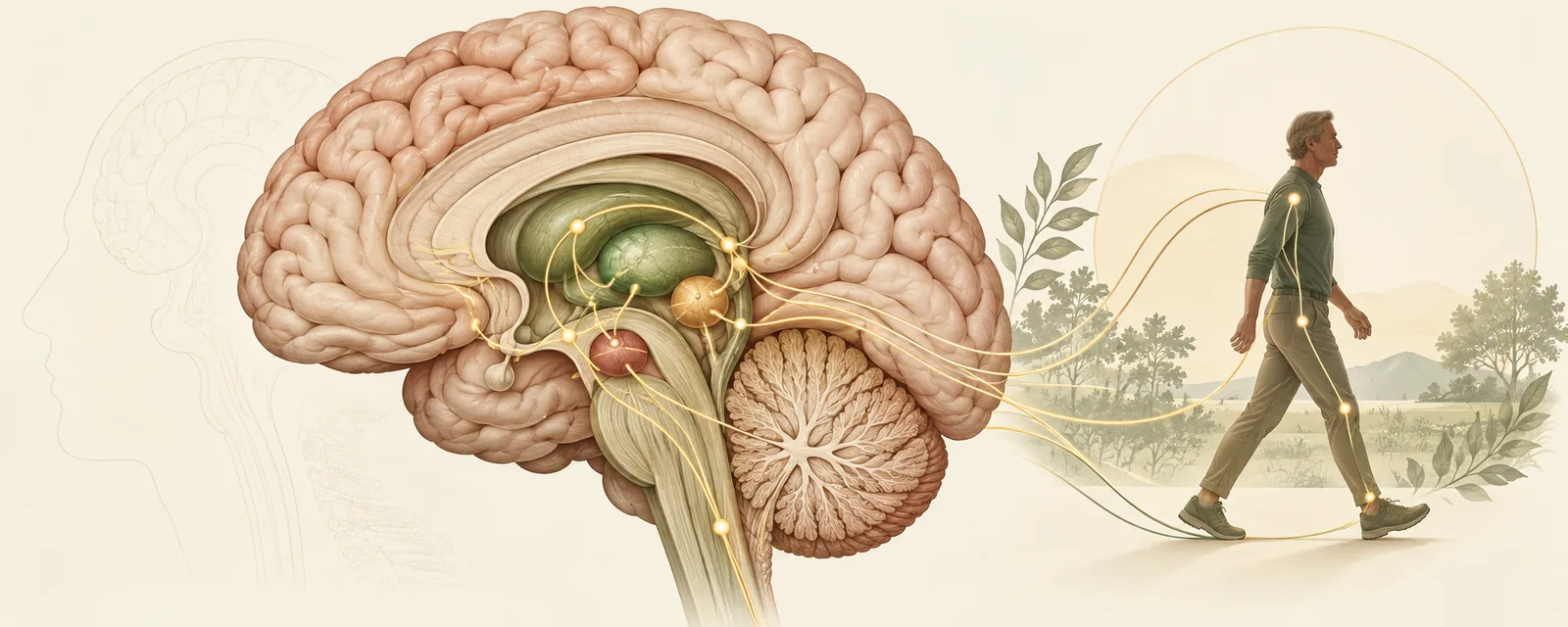
Parkinson’s disease is a progressive neurological disorder that primarily affects movement but can also involve many non-movement symptoms.
The condition is associated with dysfunction and loss of neurons involved in movement control, including dopamine-producing neurons in a brain region called the substantia nigra.
Movement and other functions
Common signs and symptoms
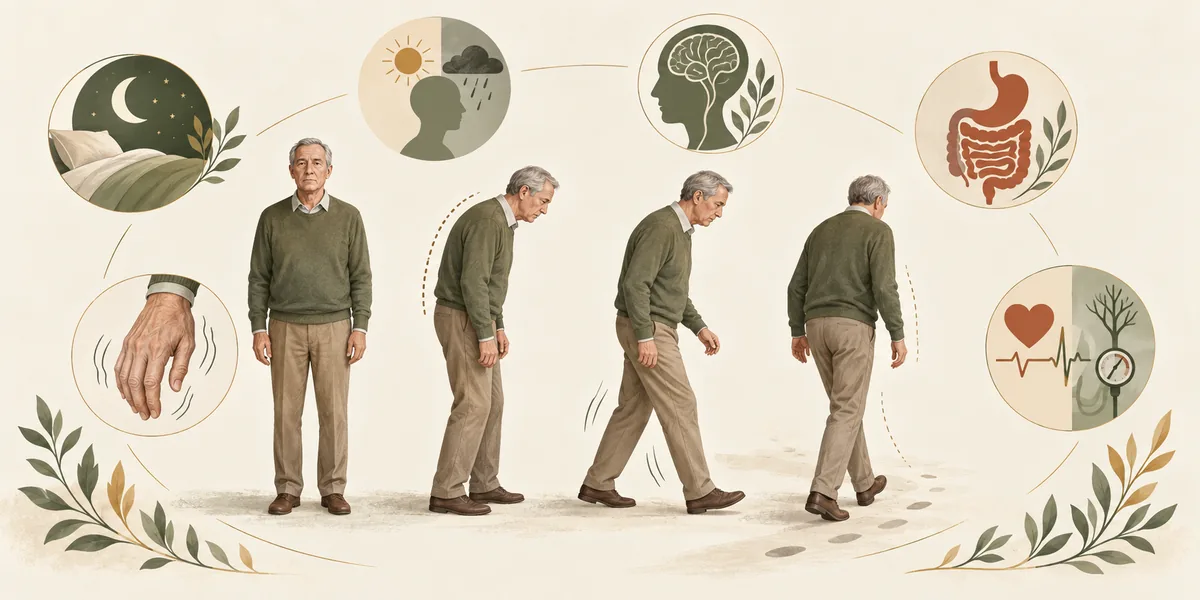
Movement-related symptoms can include:
- tremor
- slowness of movement
- muscle stiffness
- difficulty with balance and coordination
- changes in walking
People may also experience non-movement symptoms affecting sleep, mood, thinking, digestion, blood pressure regulation, and other functions.
Movement circuits
What part of the nervous system is involved?
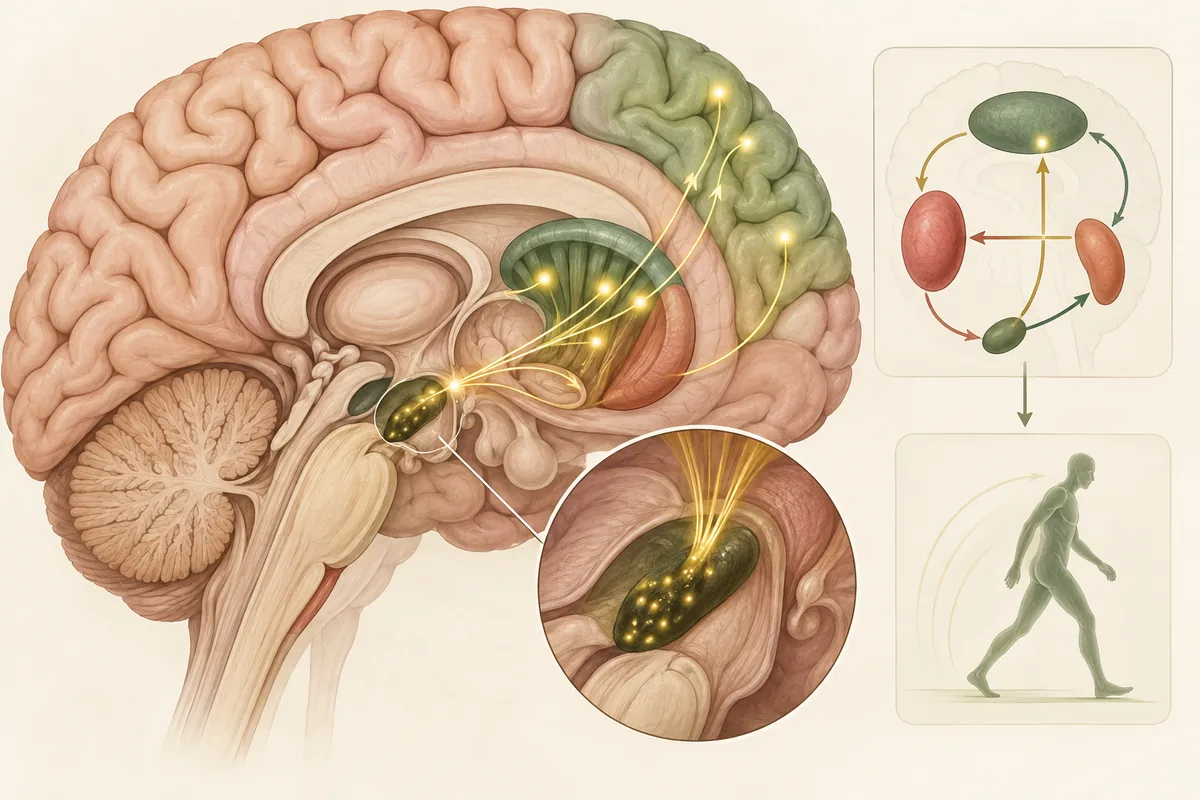
Parkinson’s primarily affects brain circuits involved in movement. Dopamine is an important chemical messenger within these circuits, and reduced dopamine signaling contributes to many characteristic movement symptoms.
Current understanding
Causes and risk factors
The exact cause is not fully understood. Aging, genetics, environmental exposures, and biological processes may contribute.
Clinical assessment
How healthcare professionals evaluate Parkinson’s
There is no single test that definitively diagnoses Parkinson’s in every case. Diagnosis typically relies on medical history and neurological examination. Laboratory testing and imaging may help exclude other conditions or support diagnosis.
Individualized care
Treatment and management
There is currently no cure for Parkinson’s disease, but treatments can help manage symptoms. These may include medications affecting dopamine pathways, rehabilitation therapies, lifestyle support, and for selected patients, surgical treatments such as deep brain stimulation.
Treatment is individualized.
Ongoing support
Living with Parkinson’s
- neurological follow-up
- physiotherapy
- occupational therapy
- speech/swallowing support
- exercise
- fall prevention
- mental health support
- sleep/non-movement symptom treatment
Professional guidance
When to seek medical attention
New or progressive tremor, stiffness, slowed movement, unexplained falls, changes in walking, or other neurological symptoms should be evaluated.
Sudden weakness, speech difficulty, facial drooping, or abrupt loss of coordination should not be assumed to be Parkinson’s and may require emergency assessment.
Reference